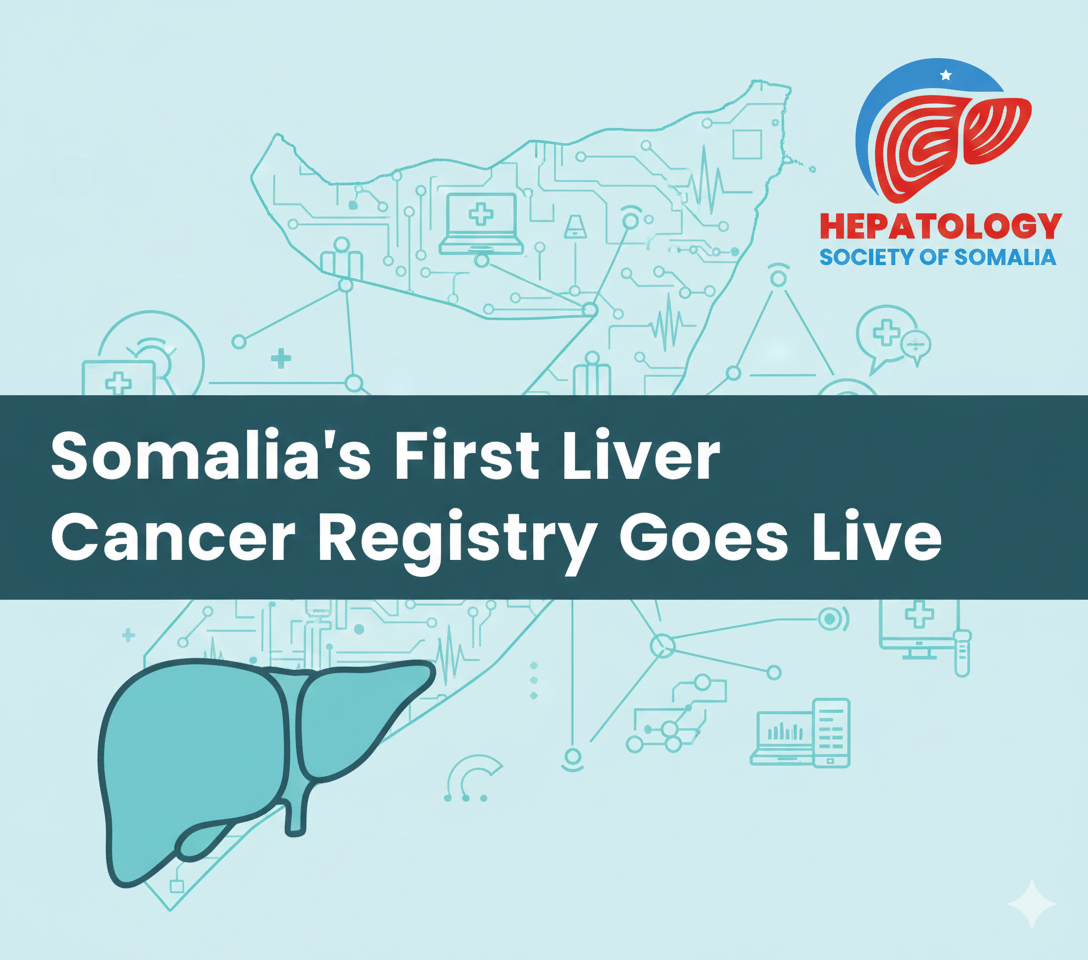
Somalia’s First Liver Cancer Registry Goes Live
Hepatology Society of Somalia (HSS)
Introduction
The Hepatology Society of Somalia (HSS) has officially launched Somalia’s first-ever Liver Cancer Registry, a landmark achievement for the nation’s healthcare and research sectors. This registry focuses on hepatocellular carcinoma (HCC) — the most common and deadliest form of primary liver cancer — and marks a transformative moment in the country’s fight against cancer-related mortality.
For the first time in history, Somalia will now have a centralized, structured, and evidence-based surveillance system dedicated to tracking liver cancer cases nationwide.
Why This Registry Matters
Liver cancer is one of the leading causes of cancer deaths in Somalia, driven primarily by:
- Chronic hepatitis B and hepatitis C
- Cirrhosis
- Late diagnosis
- Limited access to screening and early interventions
Until now, Somalia lacked a unified system to collect accurate data about liver cancer incidence, patient outcomes, risk factors, and geographic distribution. The new registry fills this gap and will:
- Strengthen early detection programs
- Improve access to treatment
- Support national cancer-control strategies
- Enable research and international collaboration
- Provide data for policymakers and health planners
What the Registry Includes
The new HCC registry collects standardized clinical information such as:
- Patient demographics
- Risk factors (HBV, HCV, alcohol use, aflatoxin exposure, metabolic disease)
- Diagnostic methods (ultrasound, CT, MRI, AFP levels)
- Tumor staging and classification
- Treatment pathways (surgery, ablation, TACE, systemic therapy)
- Follow-up and survival outcomes
This national database ensures accurate, real-time understanding of Somalia’s liver cancer burden.
Regional Coverage & Implementation
The registry will be implemented in phases across major regions:
Phase 1 – 2025
- Mogadishu
- Hargeisa
- Garowe
- Kismayo
Phase 2 – 2026
- Baidoa
- Beledweyne
- Bosaso
- Dhusamareb
HSS will provide training, digital tools, and data-collection frameworks for all medical centers involved.
Strengthening Research & Global Collaboration
HSS aims to connect the Somali registry with international hepatology and oncology networks. This will:
- Enable cross-country data comparison
- Improve research on liver cancer trends
- Support grant funding opportunities
- Facilitate exchange of expertise and training
The registry will also help Somalia contribute reliable data to global healthcare platforms such as GLOBOCAN and WHO Cancer Surveillance.
Quotes from HSS Leadership
HSS President:
“Launching Somalia’s first Liver Cancer Registry is a critical step toward saving lives. Early detection and data-driven policies will reshape the future of liver health in our country.”
Director of Research, HSS:
“For too long, our understanding of liver cancer has been based on fragmented data. This registry will inform treatment, prevention, and national strategies for decades to come.”
Next Steps (2025 Rollout)
HSS has outlined several immediate actions:
- Training oncology and hepatology teams
- Integrating the registry with hospital EMR systems
- Developing national HCC screening protocols
- Publishing the first annual HCC data report
- Conducting population-based research in high-risk regions
How Clinicians Can Participate
Somali clinicians are encouraged to:
- Report eligible HCC cases to the registry
- Use standardized diagnostic criteria
- Attend HSS training workshops
- Collaborate on research publications
- Support community screening activities
Conclusion
The launch of Somalia’s first Liver Cancer Registry is a historic milestone that brings the country closer to modern cancer surveillance standards. It establishes a strong scientific foundation for fighting liver cancer through prevention, research, and improved clinical care.
HSS remains committed to advancing hepatology excellence and saving lives across all regions of Somalia.
Media Contact
Hepatology Society of Somalia (HSS)
Mogadishu, Somalia
📧 Info@HSS.org
🌐 SomaliaHepatology.org